

Hip Pain After 50: What’s Actually Causing It and How to Get Relief
By Paul Limo | Updated June 2026 | 9 min read
Hip pain doesn’t announce itself politely. It shows up as a dull ache when you climb stairs, a sharp catch when you roll over in bed, or a stiffness that takes half the morning to shake off. By the time most people over 50 start paying attention to hip pain, it’s already been building for a while.
The hip is a remarkably resilient joint — a deep ball-and-socket design that’s meant to last a lifetime. But decades of use, combined with the gradual changes that come with age, can tip the balance from resilience to vulnerability. Understanding what’s actually happening in your hip is the first step toward doing something useful about it.
How the Hip Joint Works — and Why It Struggles After 50
The hip is a ball-and-socket joint: the rounded head of the femur (thigh bone) sits inside the acetabulum, a cup-shaped socket in the pelvis. The entire joint is wrapped in a fibrous capsule, lined with synovial membrane that produces lubricating fluid, and surrounded by powerful muscles that control movement in every direction.
Several changes converge after 50 to make this system more vulnerable:
Articular cartilage thins — the smooth cartilage coating the ball and socket gradually wears, reducing the joint’s ability to absorb impact
Synovial fluid decreases — less lubrication means more friction during movement
Hip flexor muscles weaken and tighten — especially in people who sit for long periods, shifting mechanical stress onto the joint itself
Bone density declines — increasing the risk of stress fractures and changing how the joint bears load
One important distinction: hip pain doesn’t always originate in the hip itself. The lower back, sacroiliac joint, and even the sciatic nerve can all generate pain that’s felt in the hip region. Accurate diagnosis matters more here than with almost any other joint.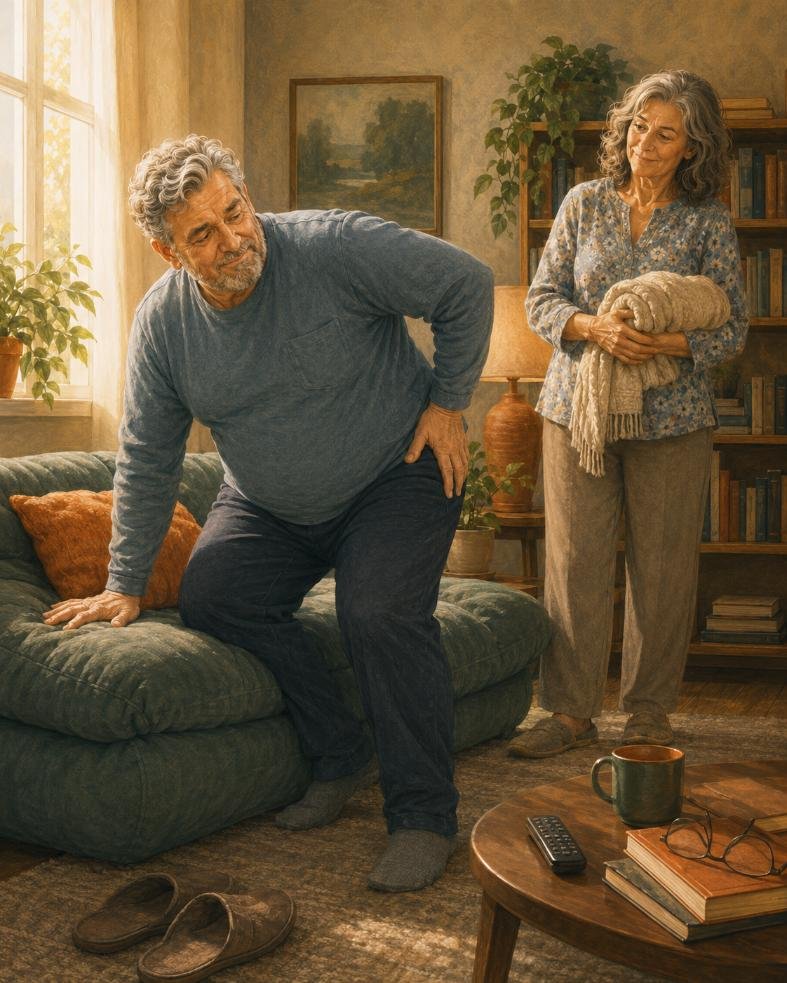
The Most Common Causes of Hip Pain After 50
1. Hip Osteoarthritis
Hip osteoarthritis is the leading cause of hip pain in adults over 50, affecting an estimated 25% of people by age 85. It develops when the cartilage cushioning the hip joint breaks down faster than the body can repair it, eventually leading to bone-on-bone contact, inflammation, and pain.
The hallmark symptoms are pain in the groin, outer thigh, or buttock that worsens with activity and eases with rest; morning stiffness lasting less than an hour; and a gradual reduction in range of motion — particularly the ability to rotate the leg inward. Many people with hip OA notice they can no longer put on socks or shoes easily, or that getting up from a low chair has become unexpectedly difficult.
Hip OA progresses slowly in most people, and the trajectory is far from inevitable. Lifestyle interventions — particularly exercise, weight management, and targeted supplementation — have strong evidence for slowing progression and reducing daily pain.
2. Trochanteric Bursitis
The trochanteric bursa is a fluid-filled sac sitting between the greater trochanter (the bony prominence on the outer hip) and the overlying tendons and muscles. When this bursa becomes inflamed, it produces a sharp or burning pain on the outside of the hip that often radiates down the outer thigh.
Trochanteric bursitis is more common in women and in people who are overweight. It typically hurts more at night — particularly when lying on the affected side — and flares up when climbing stairs, getting up from a seated position, or walking for extended periods. Unlike hip OA, the pain is usually localized to one specific spot that’s tender to the touch.
Despite the name, recent research suggests that many cases previously called trochanteric bursitis are actually caused by gluteal tendinopathy — degeneration of the tendons attaching the gluteal muscles to the trochanter — rather than true bursal inflammation. The distinction matters because the treatment approach differs slightly.
3. Hip Labral Tear
The labrum is a ring of cartilage that lines the rim of the hip socket, deepening the joint and helping to seal the synovial fluid inside. Labral tears can result from trauma, structural abnormalities, or — increasingly in people over 50 — simple degeneration over time.
Symptoms include a deep groin pain that’s difficult to localize, a clicking or locking sensation in the hip with certain movements, and pain with prolonged sitting or activities that involve rotating the hip. Many labral tears are asymptomatic and discovered incidentally on MRI scans done for other reasons.
4. Hip Flexor Tightness and Tendinopathy
The hip flexors — primarily the iliopsoas muscle — connect the lumbar spine and pelvis to the femur. After 50, these muscles frequently become both tight and weak, particularly in people with sedentary jobs. Tight hip flexors create a forward pelvic tilt that increases compressive load on the hip joint and can cause a deep, aching pain in the front of the hip or groin.
When the iliopsoas tendon itself becomes inflamed or degenerates, the condition is called iliopsoas tendinopathy. It often produces a snapping sensation (sometimes audible) when the hip is flexed and extended — sometimes called “snapping hip syndrome.”
5. Referred Pain from the Lower Back
This is the most commonly missed cause of hip pain in people over 50. Lumbar spinal stenosis, herniated discs, sacroiliac joint dysfunction, and sciatic nerve irritation can all produce pain that’s felt primarily in the hip, buttock, or outer thigh — with minimal or no back pain at all.
A useful clinical clue: if moving the hip joint itself (rotating the leg inward and outward while lying down) doesn’t reproduce the pain, but bending or extending the spine does, the problem is more likely coming from the back than the hip. This distinction is why imaging and professional evaluation are worth pursuing when hip pain doesn’t respond to standard treatments.
What Actually Helps: A Practical Approach
Targeted Strengthening and Mobility Work
The evidence for exercise in hip OA and related conditions is overwhelming. A 2014 Cochrane review of 10 randomized trials found that land-based exercise significantly reduces hip pain and improves physical function, with benefits comparable to those of pain medications but without the side effects or dependency risks.
The most effective approach combines strengthening with mobility work:
Gluteal strengthening — clamshells, side-lying leg raises, and glute bridges reduce load on the hip joint by improving the hip’s muscular support system
Hip flexor stretching — kneeling hip flexor stretches and pigeon pose variations address the chronic tightness that builds from sitting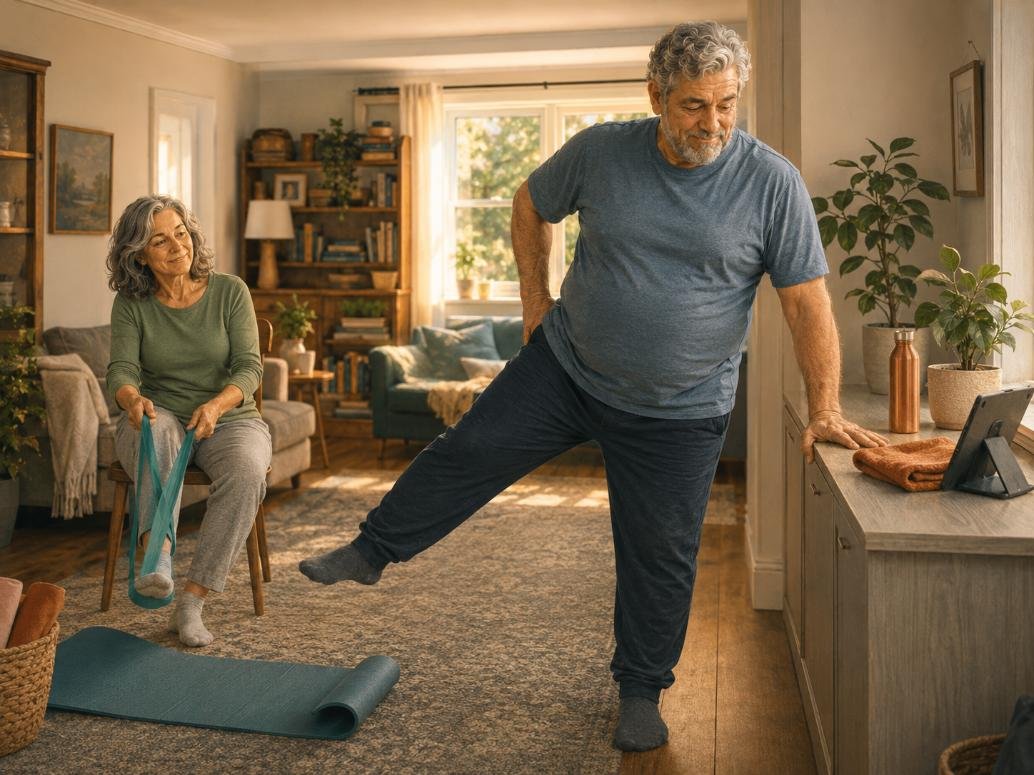
Low-impact aerobic exercise — swimming and cycling are particularly well-suited to hip conditions because they allow full range of motion without impact loading
Tai chi — several trials have shown benefits for hip and knee OA specifically, combining slow movement, balance, and mindful body awareness
Weight Management
The hip joint bears two to three times body weight during normal walking, and up to eight times body weight during running or stair climbing. The mechanical benefit of losing even modest amounts of weight is therefore significant — a 10-pound reduction translates to 20–30 fewer pounds of force on each hip with every step.
Beyond mechanics, adipose tissue secretes pro-inflammatory molecules called adipokines that directly contribute to cartilage breakdown in OA. Weight loss reduces circulating levels of these molecules, providing a biological benefit that goes beyond simple load reduction.
Evidence-Backed Supplements for Hip Joint Health
The same supplements that support knee joint health apply to the hip, since the underlying biology of osteoarthritis is consistent across joints.
Glucosamine sulfate has been studied in hip OA specifically. A three-year randomized trial published in the Lancet found that glucosamine sulfate (1500mg daily) significantly slowed the narrowing of the joint space — a structural marker of OA progression — compared to placebo, while also reducing pain and improving function.
Chondroitin sulfate complements glucosamine by helping cartilage retain water and resist compression. Most high-quality trials use the two compounds together, and the combination consistently outperforms either alone.
Omega-3 fatty acids from fish oil reduce systemic inflammation and have been shown to decrease levels of cartilage-degrading enzymes. A dose of 2–3 grams of combined EPA and DHA daily is the range used in most successful trials.
Avocado-soybean unsaponifiables (ASU) are a less well-known extract with surprisingly strong evidence for hip OA specifically. Multiple European trials have shown ASU reduces pain, improves function, and may slow structural progression. It’s actually approved as a prescription drug for hip and knee OA in France.
Heat, Cold, and Physical Therapies
For acute flare-ups — particularly with bursitis — ice applied to the outer hip for 15–20 minutes reduces inflammation and dulls pain. For chronic stiffness associated with OA, moist heat before movement helps loosen the joint and surrounding muscles.
Manual therapy — specifically joint mobilization performed by a physical therapist or osteopath — has good evidence for improving hip OA outcomes when combined with exercise. A 2009 trial in the Annals of Internal Medicine found that a combination of manual therapy and supervised exercise was more effective than exercise alone for reducing hip OA pain at one year.
Daily Habits That Protect the Hip Joint
Small adjustments to daily habits can meaningfully reduce cumulative stress on the hip:
Avoid prolonged sitting — get up and move for at least 5 minutes every 45–60 minutes; hip flexors shorten rapidly with sustained sitting
Choose supportive footwear — worn-down or unsupportive shoes alter gait mechanics in ways that increase hip joint loading
Sleep position matters — sleeping on the side with a pillow between the knees reduces hip adduction and the compressive stress it places on the joint and bursa
Use a walking stick on inclines — even a simple walking pole on the opposite side reduces hip joint loading by up to 20% on hills and stairs
Vary your surfaces — walking on grass or packed dirt is significantly lower-impact than concrete or asphalt
When Hip Pain Requires Medical Attention
Most hip pain in people over 50 responds to conservative management, but certain presentations warrant prompt evaluation:
Pain that came on suddenly after a fall or impact, particularly if it’s impossible to bear weight — this may indicate a hip fracture, a serious injury in people over 60
Severe pain at rest or at night that isn’t related to position — can occasionally indicate bone pathology including infection or, rarely, malignancy
Fever combined with hip pain and swelling — suggests possible joint infection (septic arthritis), which is a medical emergency
Pain that has not responded to 6–8 weeks of consistent conservative treatment — warrants imaging to clarify the diagnosis
Significant leg length discrepancy or visible change in posture — may indicate advanced structural joint changes
The Bottom Line
Hip pain after 50 is common, often gradual in onset, and widely undertreated — partly because people assume it’s just part of aging and partly because the hip is less visible and less discussed than the knee. But the hip responds well to the same strategies that work for any joint under age-related stress: targeted movement, load management, anti-inflammatory nutrition, and evidence-backed supplementation.
The window for meaningful intervention is wide. Even people with moderate hip OA or chronic bursitis can achieve significant reductions in daily pain and meaningful improvements in mobility — without surgery, without prescription anti-inflammatories, and without accepting limitation as inevitable.
For a closer look at which joint supplements have the best evidence behind them — and which ones are mostly marketing — see the Best Supplements for Joint Pain guide on this site.
Frequently Asked Questions
Where is hip arthritis pain usually felt?
Hip OA pain is most commonly felt in the groin — which surprises many people who expect to feel it on the side or back of the hip. Pain in the outer hip or buttock is more typical of bursitis or referred pain from the lower back. True hip joint pain often radiates down the inner thigh toward the knee.
Can hip pain go away on its own?
It depends on the cause. Bursitis and hip flexor tendinopathy often resolve with rest, targeted stretching, and time — typically 4–8 weeks. Hip OA does not resolve spontaneously, but symptoms fluctuate and many people have long periods of manageable pain with appropriate lifestyle changes. Labral tears generally don’t heal on their own but may remain asymptomatic.
Is walking good or bad for hip pain?
Generally good, with caveats. Regular walking maintains joint mobility, strengthens surrounding muscles, and helps with weight management — all of which benefit hip health. The key is pacing: short, consistent walks on softer surfaces are better than infrequent long walks on hard pavement. If walking consistently worsens pain significantly, that warrants evaluation rather than just pushing through.
How is hip pain different from lower back pain?
The distinction isn’t always obvious, but a useful test is the FABER test (Flexion, ABduction, External Rotation): lying on your back, place one foot on the opposite knee and gently press the bent knee toward the floor. Pain in the groin with this movement suggests a hip joint source. Pain in the lower back or SI joint region suggests a spinal source. Many people over 50 have both simultaneously, which is why professional assessment matters.