
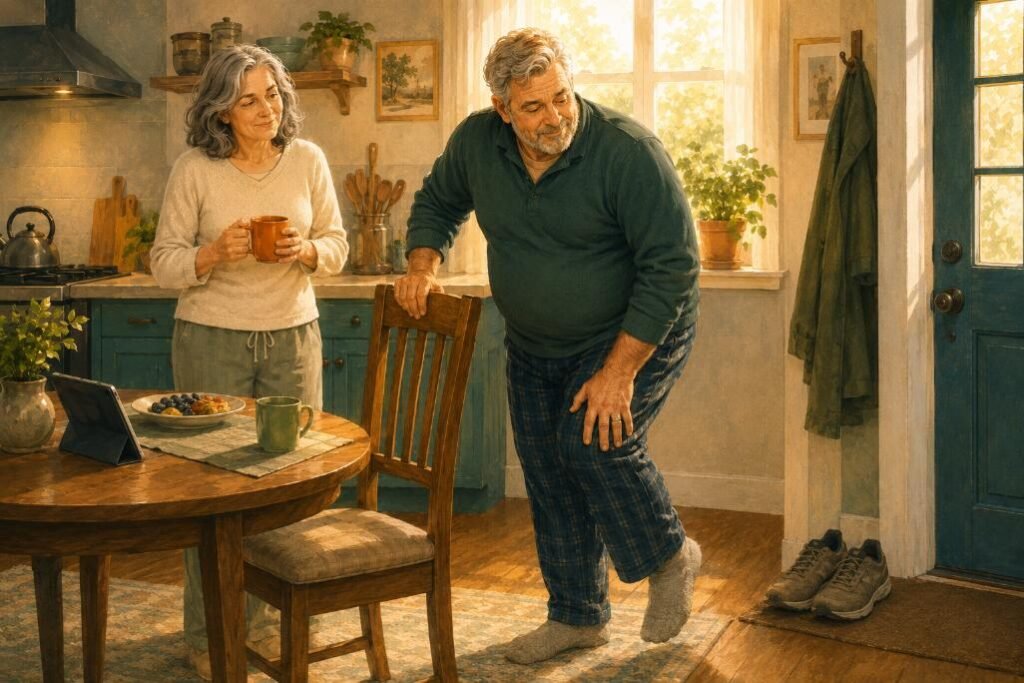
What Causes Knee Pain After 50 (And What Actually Helps)
By Paul Limo | Updated June 2026 | 8 min read
If you’ve woken up in the morning and felt that familiar stiffness in your knees, you’re not alone. Knee pain after 50 is one of the most common complaints doctors hear — and one of the most misunderstood. The good news is that most knee pain in this age group has clear causes, and many of them respond well to natural, non-drug approaches.
This article breaks down the most common causes of knee pain in people over 50, explains what’s actually happening in your joints, and covers what the research says about approaches that genuinely help.
Why Knees Take the Hit After 50
Your knees are the largest joints in your body and they bear an enormous load — every step you take puts roughly 1.5 times your body weight on each knee. By the time you reach 50, your knees have absorbed decades of impact, movement, and stress.
Several age-related changes happen simultaneously that make knees more vulnerable:
Cartilage thins and loses elasticity — the protective cushioning between bones gradually wears down
Synovial fluid decreases — this natural lubricant that keeps joints moving smoothly becomes less abundant
Muscle strength declines — weaker quads and hamstrings mean less support for the joint
Inflammation increases — low-grade chronic inflammation becomes more common with age
None of these processes are inevitable in the sense of being unstoppable — but understanding them helps you target the right solutions.
The Most Common Causes of Knee Pain Over 50
1. Osteoarthritis (OA)
Osteoarthritis is by far the most common cause of knee pain in adults over 50. It affects roughly 1 in 4 Americans over 45. OA is often called “wear and tear” arthritis, though that’s a simplification — it’s actually a complex breakdown of cartilage combined with an inflammatory response.
Typical symptoms include stiffness in the morning that eases after 20–30 minutes, aching after sitting for a long time, pain that worsens with activity and improves with rest, and sometimes a grinding or crunching sensation (called crepitus).
OA doesn’t have to mean the end of an active life. Research consistently shows that targeted exercise, weight management, and certain supplements can significantly slow progression and reduce symptoms.
2. Knee Bursitis
Bursae are small, fluid-filled sacs that cushion the areas where tendons and muscles pass over bone. The knee has about 11 of them, and any can become inflamed. Prepatellar bursitis (in front of the kneecap) is especially common after 50, particularly in people who spend time kneeling.
Bursitis typically causes swelling, warmth, and tenderness in a localized area. Unlike OA, the pain is often present even at rest.
3. Meniscus Tears
The meniscus is a C-shaped piece of cartilage that acts as a shock absorber between your thigh bone and shin bone. After 50, meniscus tears can happen from relatively minor movements — simply standing up awkwardly or pivoting on a slightly bent knee.
Signs include a popping sensation at the time of injury, swelling over the following days, difficulty fully straightening the knee, and pain when twisting or rotating. Importantly, many meniscus tears in older adults are actually degenerative rather than traumatic — they develop gradually over time.
4. Patellofemoral Pain Syndrome
This condition, sometimes called “runner’s knee,” causes pain around or behind the kneecap. It’s more common than most people realize in the 50+ age group. The pain tends to worsen when going up or down stairs, squatting, kneeling, or sitting with knees bent for long periods.
It’s often driven by muscle imbalances — particularly weakness in the hip and thigh muscles — that cause the kneecap to track incorrectly.
5. Gout
Gout is caused by uric acid crystals depositing in joints. While it classically affects the big toe, the knee is actually the second most commonly affected joint. Gout attacks come on suddenly, causing intense pain, redness, warmth, and swelling that often peak within 24 hours.
Gout is increasingly common after 50, partly because kidney function declines slightly with age, making it harder to excrete uric acid. Diet plays a significant role — particularly consumption of red meat, shellfish, sugary drinks, and alcohol.

What Actually Helps: Evidence-Based Approaches
The range of treatments marketed for knee pain is enormous, and a lot of it is noise. Here’s what the research actually supports.
Targeted Exercise (The Most Underused Tool)
This one surprises many people — if your knees hurt, moving them more feels counterintuitive. But research is consistent: regular low-impact exercise reduces knee pain and improves function in people with osteoarthritis.
The key word is targeted. Strengthening the quadriceps, hamstrings, and hip abductors takes load off the knee joint itself. Swimming, cycling, and walking are all well-supported. High-impact activities like running on concrete are generally not recommended during active flare-ups.
A 2019 review in the British Journal of Sports Medicine found that exercise was as effective as NSAIDs for knee OA pain over a 6-month period — without the side effects.
Weight Management
Body weight has a disproportionate effect on knees. Every extra pound of body weight puts roughly 4 pounds of additional force on the knee joint during walking. Losing 10 pounds means your knees absorb 40 fewer pounds of pressure with every step.
Beyond the mechanical benefit, fat tissue produces inflammatory cytokines that directly worsen joint inflammation. This is why even people with relatively mild OA often see significant symptom improvement with modest weight loss.
Anti-Inflammatory Diet
Chronic low-grade inflammation underlies most forms of knee pain after 50. Diet has a powerful effect on systemic inflammation. Foods consistently shown to reduce inflammatory markers include:
Fatty fish (salmon, sardines, mackerel) — rich in omega-3 fatty acids
Leafy greens (spinach, kale) — high in antioxidants and vitamin K
Berries — packed with anthocyanins that inhibit inflammatory enzymes
Olive oil — contains oleocanthal, which works similarly to ibuprofen
Turmeric — curcumin has been studied extensively for joint pain relief
Conversely, processed foods, refined sugars, and vegetable oils high in omega-6 fats have been shown to increase inflammatory markers.
Joint Supplements
The supplement market for joint pain is crowded, but a handful of compounds have genuine evidence behind them.
Glucosamine and chondroitin are the most studied. They’re natural components of cartilage, and several large trials — including the NIH-funded GAIT study — have found them helpful for moderate-to-severe knee OA, particularly when taken together.
Collagen peptides have growing evidence behind them. A 2017 randomized controlled trial found that hydrolyzed collagen supplementation significantly reduced joint pain in active adults compared to placebo. Collagen is a key structural component of cartilage.
Boswellia serrata (Indian frankincense) has shown consistent results in clinical trials for reducing knee OA pain and improving function. It works by inhibiting 5-lipoxygenase, an enzyme involved in the inflammatory pathway.
MSM (methylsulfonylmethane) is a sulfur-containing compound that plays a role in collagen formation. Several studies have shown it reduces pain and improves physical function in knee OA.
Heat and Cold Therapy
Simple but underappreciated. Cold therapy (ice packs wrapped in a cloth, applied for 15–20 minutes) is most effective for acute flare-ups and after activity — it reduces swelling and numbs pain. Heat therapy (warm compress, heating pad) works better for chronic stiffness and before exercise — it improves blood flow and relaxes muscles around the joint.
When to See a Doctor
Most knee pain after 50 can be managed conservatively, but some symptoms warrant prompt medical evaluation:
Sudden, severe pain following an injury or fall
Significant swelling that appears rapidly (within hours)
Inability to bear weight on the leg
Knee that locks up or gives way unpredictably
Redness and warmth combined with fever (possible infection)
A diagnosis — even if it’s “just arthritis” — gives you a roadmap. Knowing exactly what you’re dealing with helps you choose the right approach and avoid interventions that don’t fit your situation.
The Bottom Line
Knee pain after 50 is common but it’s not something you simply have to accept. The most effective approach combines multiple strategies: staying active with the right kind of exercise, managing body weight, eating in a way that reduces inflammation, and considering evidence-backed supplements for joint support.
No single pill, cream, or device is going to solve the problem on its own — but the combination of consistent lifestyle choices and targeted support can make a significant difference in how your knees feel day to day.
We cover specific supplement options and real-world results in our review articles — including what actually worked for me personally after years of ignoring my own joint health.
Frequently Asked Questions
Is knee pain after 50 always arthritis?
No. While osteoarthritis is the most common cause, knee pain after 50 can also result from bursitis, tendinitis, meniscus damage, gout, or muscle imbalances. An accurate diagnosis matters because the best treatment depends on the underlying cause.
Can knee cartilage regenerate?
Cartilage has very limited blood supply and heals slowly. Full regeneration of lost cartilage is not currently possible through lifestyle changes alone. However, slowing further breakdown and reducing inflammation can preserve what remains and dramatically improve pain and function.
How long does it take for glucosamine to work?
Most studies show that glucosamine takes 4–8 weeks of consistent use before meaningful pain relief is noticed. It’s not a fast-acting painkiller — it works more slowly by supporting cartilage health and reducing inflammation over time.
Is it safe to exercise with knee pain?
In most cases, yes — and the evidence strongly supports it. The key is choosing the right type of exercise (low-impact, strength-focused) and avoiding activities that sharply worsen pain. Working with a physical therapist to develop a personalized program is ideal, especially early on.